How to Stop Garage Ceiling Condensation: Why Garages "Rain" in Winter and How to Fix It

Water dripping from your garage ceiling is not a roof leak; it is internal condensation. Here is how air-sealing bypasses and rafter baffles prevent winter mold.
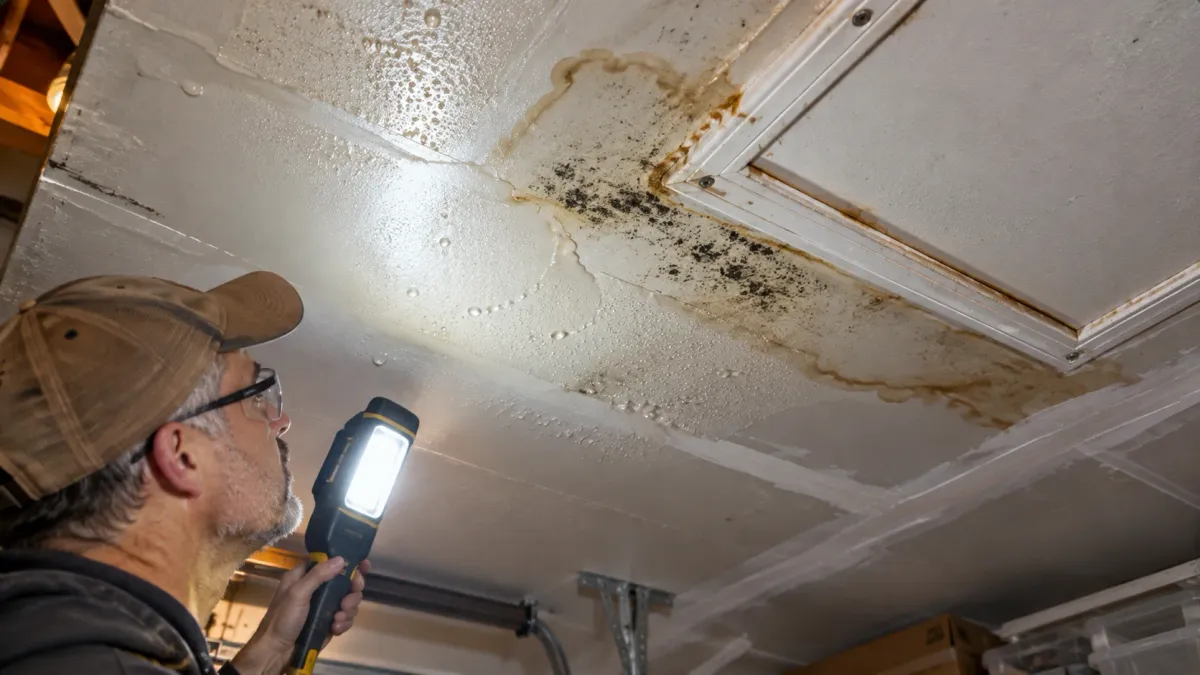
Table of Contents7 Sections
- 01.The Physics of Garage “Rain”: Dew Point and the Stack Effect
- 02.The Primary Moisture Culprits: Snow Slush and Portable Heaters
- 03.Step 1: Air-Sealing the Ceiling Bypasses (The Missing Link)
- 04.Step 2: Proper Attic Ventilation and Rafter Baffles
- 05.Step 3: Insulation Selection: Rockwool vs. Blown-in Cellulose
- 06.Products That Solve Garage Ceiling Condensation
- 07.Emergency Protocol: How to Dry Out a Dripping Ceiling Today
It is 11:00 AM on a bright, sunny winter morning in Ohio. The outdoor temperature sits at a brisk 28°F, but the sky is clear and blue. You walk into your garage to grab a socket set, and a cold water droplet lands directly on the back of your neck.
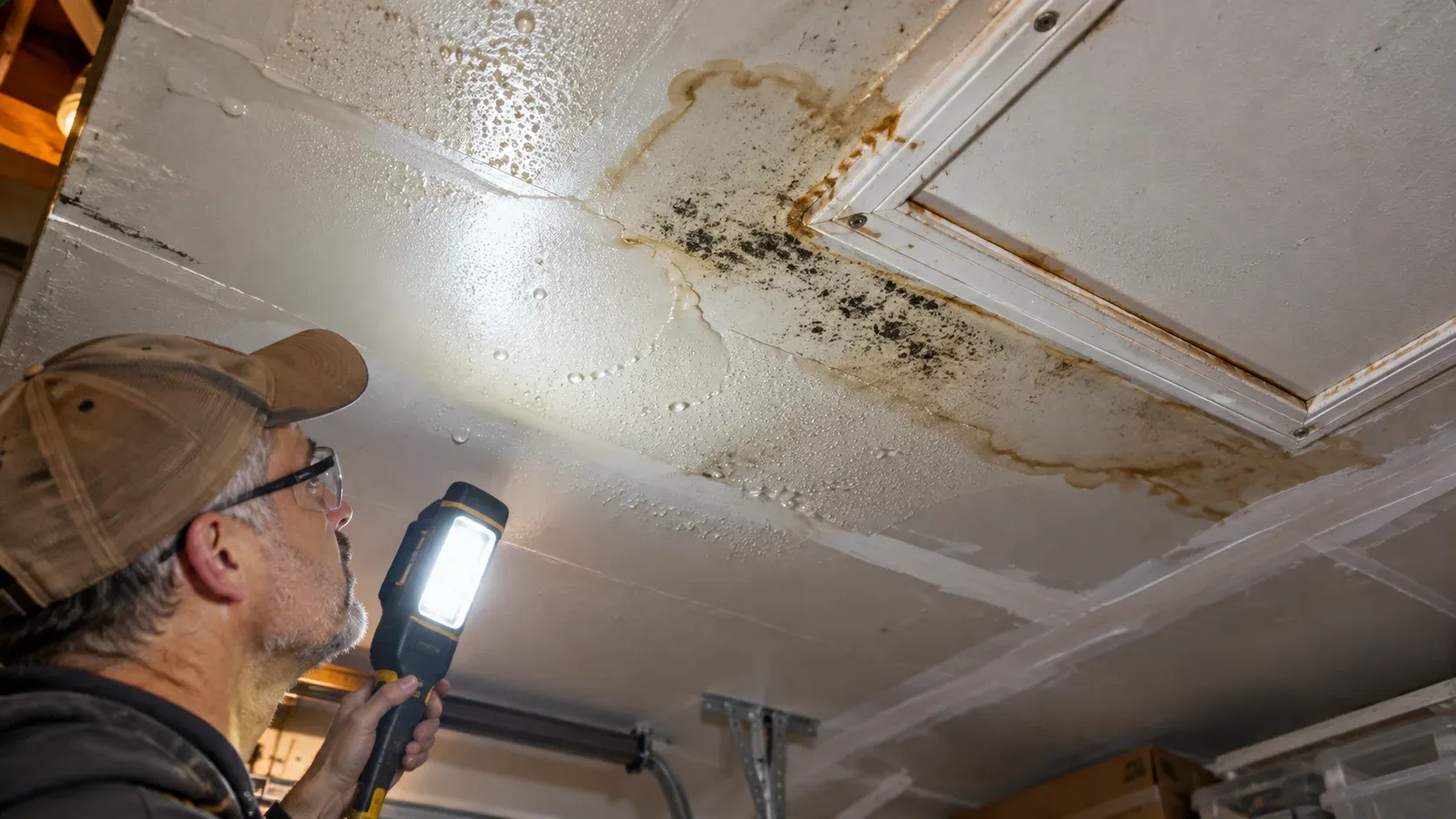
You look up at the ceiling. Water is dripping steadily from the drywall seams, splashing across the hood of your freshly washed car and pooling on the cast-iron table of your table saw. Several drywall tape joints are sagging, bloated with dark water stains.
Your roof is not leaking. It has not rained or snowed in three days.
You are experiencing a common building-science failure: garage ceiling condensation, commonly known among tradesmen as “garage rain.”
Here is why warm, moist air condenses against cold roof sheathing, why burning portable propane heaters makes the problem ten times worse, and how to stop attic moisture permanently using air sealing, rafter baffles, and balanced ventilation.
The Physics of Garage “Rain”: Dew Point and the Stack Effect
Water droplets falling from an intact garage ceiling stem from basic thermodynamics: the relationship between indoor air temperature, relative humidity, and the dew point.
Thermal physics cross section infographic illustrating the ‘Garage Rain’ condensation cycle, warm moist air evaporating from melting snow under car engine rising to cold uninsulated garage attic decking at 20°F, condensing on roofing nails and dripping back down through drywall ceiling as indoor rain, labeled thermal gradient.
Warm air holds significantly more water vapor than cold air. Because warm air is less dense than cold air, it naturally rises toward the ceiling via the stack effect.
In a garage with an unsealed ceiling, that warm, moisture-laden air sneaks through hidden cracks around electrical junction boxes, attic access hatches, and drywall perimeters into the unconditioned attic cavity.
During a freezing winter night, the plywood roof sheathing chills down to the outdoor ambient temperature (often 15°F to 20°F). When warm, humid garage air contacts that freezing wood sheathing, the air chills past its dew point instantly. Water vapor condenses onto the underside of the roof deck and freezes into a thick blanket of white frost.
The following morning, sunlight strikes the dark roof shingles. The plywood deck warms up to 45°F, melting that frost blanket all at once. Hundreds of ounces of liquid water pour down onto your fiberglass insulation batts, saturating the ceiling drywall and dripping into your workshop.
The Primary Moisture Culprits: Snow Slush and Portable Heaters
Many homeowners mistakenly believe their garage air is bone dry in winter. In reality, two everyday garage habits pump gallons of raw water vapor directly into your workshop air.
1. Melting Road Slush on the Slab
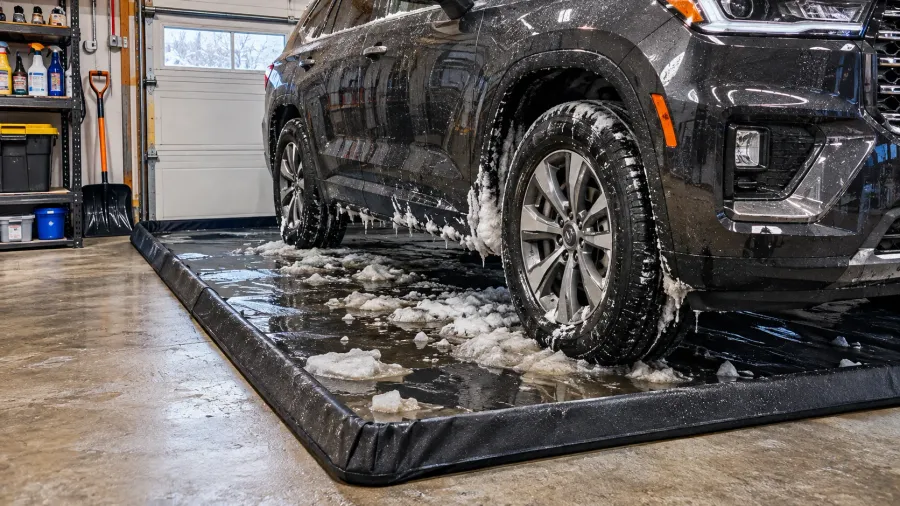
Every time you park a snow-covered car inside your garage, thirty to fifty pounds of slush and road ice drop onto the concrete. As your engine cools, that frozen mass liquefies into five to eight gallons of dirty water.
If you don’t contain and evacuate that runoff using a dedicated containment mat as detailed in our garage snow containment mat guide, that standing water slowly evaporates into the enclosed garage space, driving relative humidity from thirty percent up past eighty percent.
2. Unvented Portable Propane Heaters (Mr. Heater Buddy)
The most destructive source of winter attic moisture is the portable unvented propane or kerosene space heater.
Combustion chemistry dictates that burning one pound of propane gas produces 1.6 pounds of pure water vapor as an exhaust byproduct. Burning through a standard twenty-pound barbecue propane tank in an enclosed garage discharges nearly four gallons of pure water vapor straight into your room air.
If you must heat an unheated workshop in freezing weather, install an electric unit or a sealed direct-vent forced-air furnace that vents combustion gases outdoors, as covered in our garage heating breakdown.
Garage Heating & Moisture Generation Comparison
Unvented Propane / Kerosene Heater
Portable Dehumidifier in Cold Shop
Direct-Vent Forced-Air Gas Furnace
240V Electric Hardwired Unit Heater
Step 1: Air-Sealing the Ceiling Bypasses (The Missing Link)
Many homeowners assume that rolling out more fiberglass insulation batts in the attic will stop condensation.
That assumption is false. Fiberglass and cellulose insulation only slow thermal heat conduction. They do not block airflow. Warm, moist air passes straight through fibrous insulation like air through a furnace filter.
You must create an airtight vapor barrier across your ceiling drywall before adding insulation.
Climb into your garage attic with a work light, knee pads, a respirator, and a professional foam applicator gun loaded with closed-cell polyurethane expanding foam (such as Great Stuff Pro):
- Seal Electrical Junction Boxes: Spray expanding foam around the outer perimeter of every ceiling light box, ceiling fan mount, and garage door opener receptacle box.
- Weatherstrip the Attic Access Hatch: Construct a two-inch wooden retaining dam around the attic hatch opening. Glue a two-inch piece of rigid XPS foam board to the attic side of the hatch door, and install closed-cell rubber weatherstripping along the perimeter stop molding.
- Seal Framing Top Plates: Run continuous beads of foam along the junction where drywall sheets meet the wooden top plates of partition walls.
Step 2: Proper Attic Ventilation and Rafter Baffles
Air-sealing stops moisture from entering the attic. Proper attic ventilation sweeps away any residual moisture that does escape.
The Energy Star attic air sealing and insulation guidelines emphasize that stopping convective leaks prevents moisture damage far more effectively than adding insulation over open bypasses. A healthy roof cavity requires continuous passive airflow that follows the 1:300 Ventilation Rule: for every 300 square feet of attic floor area, your roof must provide at least one square foot of net free ventilating area, split equally between low intake vents (soffit vents) and high exhaust vents (ridge vent).
Install Rafter Baffles (AccuVent or Durovent)
The most common installation mistake in garage attics is pushing loose fiberglass insulation tight into the roof eaves. This blocks your soffit intake vents, choking off airflow and turning your attic into a mold incubator.
Staple rigid polystyrene or cardboard rafter baffles directly to the underside of the roof sheathing in every rafter bay. Baffles maintain an unobstructed two-inch airway between the roof deck and the top plate of your exterior wall, ensuring outdoor air sweeps continuously across the roof deck regardless of how deeply you blow insulation.
Step 3: Insulation Selection: Rockwool vs. Blown-in Cellulose
Once your ceiling is airtight and your rafter baffles are pinned, add thermal insulation over the garage ceiling to maintain an R-30 to R-38 thermal barrier.
- Rockwool Comfortbatt Mineral Wool (R-30): Outstanding moisture resistance. Mineral wool is spun from natural basalt rock; it is completely hydrophobic (repels liquid water), never sags when exposed to ambient humidity, and will not support mold growth.
- Blown-in Cellulose: Exceptional coverage. Cellulose fibers settle densely around framing irregularities, providing superior resistance to air movement compared to loose fiberglass.
If your garage slab also sweats during sudden spring warmups, read our detailed diagnostic guide on how to stop garage floor sweating in winter. For unfinished spaces, check our structural analysis of plywood vs. drywall for garage workshop walls to maintain proper fire separation while keeping ceiling joints airtight.
Products That Solve Garage Ceiling Condensation
These three products deliver proven moisture-proofing and airflow control.
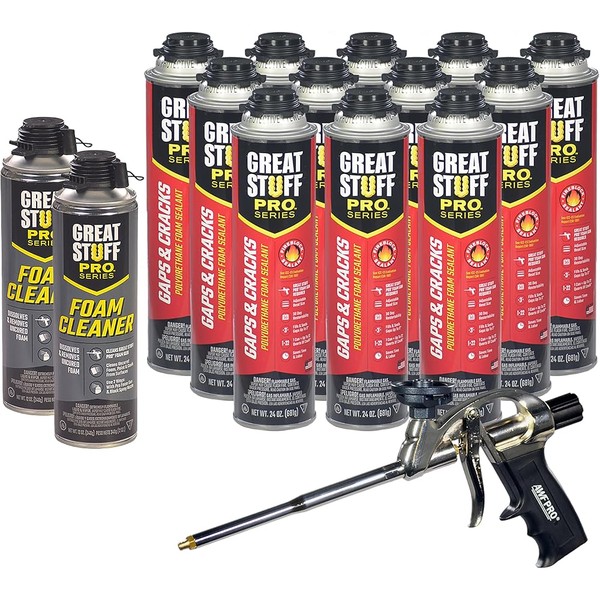
Great Stuff Pro Gaps & Cracks Insulating Foam Sealant (with Pro Gun)
Best For: Air-sealing ceiling electrical boxes, attic hatch frames, and drywall top plates.
- +Closed-cell polyurethane expanding foam seals electrical bypasses completely airtight
- +Professional dispensing gun delivers pinpoint bead control without messy overfilling
- +Bonds permanently to wood framing, drywall, galvanized conduit, and masonry
- +Cured foam remains flexible to accommodate natural roof framing expansion
- -Requires acetone gun cleaner solvent to flush the applicator gun after use
- -Expanding foam sticks permanently to skin and clothes; wear heavy gloves
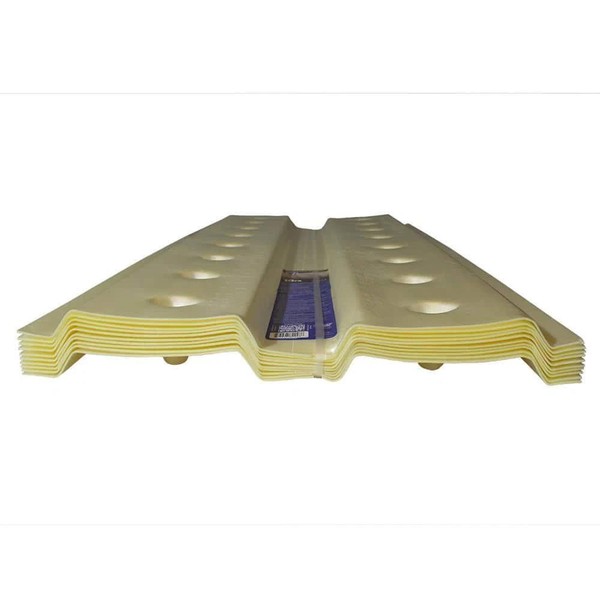
Durovent 22-Inch x 4-Foot Polystyrene Rafter Baffles (Pack of 10)
Best For: Preserving critical passive roof deck ventilation above garage ceiling insulation.
- +Maintains clear 2-inch ventilation channel from soffit vents to ridge exhaust
- +Prevents blown-in insulation from tumbling over and blocking eaves intake vents
- +Moisture-resistant extruded polystyrene will not rot, mildew, or sag over time
- +Perforated center fold snaps easily to fit both 16-inch and 24-inch rafter spacing
- -Requires crawling into tight, low-clearance roof eaves to staple into place
- -Can crack if stepped on or handled roughly in sub-zero attic temperatures

Tacklife Professional Pin-Type Wood and Drywall Moisture Meter
Best For: Tracking down damp ceiling areas and verifying that attic sheathing has dried out.
- +Sharp stainless steel dual pins measure moisture content inside drywall and rafters
- +Color-coded LED bar graph alerts you to hidden mold risk zones instantly
- +Audible alarm sounds when building materials exceed 17% moisture content
- +Rugged rubberized housing withstands tough workshop and attic drops
- -Leaves two tiny pin prick marks on finished drywall surfaces during testing
- -Requires 9V battery replacement annually
Emergency Protocol: How to Dry Out a Dripping Ceiling Today
If your garage ceiling is actively dripping water onto your tools right now, execute this four-step emergency procedure:
- Crack the Door: Open your overhead garage door 4 inches and crack a side window.
- High-Velocity Air: Set a heavy-duty floor blower fan blowing upward toward the damp ceiling.
- Turn Off Heaters: Shut down all unvented propane or kerosene space heaters immediately.
- Squeegee the Slab: Push all melted snow slush and water puddles out of the garage.
Flushing your garage with cool, dry outdoor air will drop the indoor dew point within an hour. The standing frost on your roof deck will sublimate directly into vapor and ventilate harmlessly outside.
Once dry weather returns, climb into the attic, seal your ceiling bypasses, install rafter baffles, and eliminate open flame heaters. Your garage ceiling will stay bone dry through the coldest winter storms.

Hank Miller
Hank is a master craftsman and DIY mechanic based in Ohio. He tests workshop equipment, garage floor coatings, and power tools under brutal, real-world workshop conditions, with zero paid brand sponsorships.