Wiring a Serious Garage Workshop: 60-Amp vs. 100-Amp Subpanel (Math, Wire Sizing, and Code Traps)

Running a 240V welder and an EV charger from your laundry outlet is a recipe for electrical fire. Learn subpanel sizing math, aluminum MHF savings, and the 3 fatal NEC code traps.
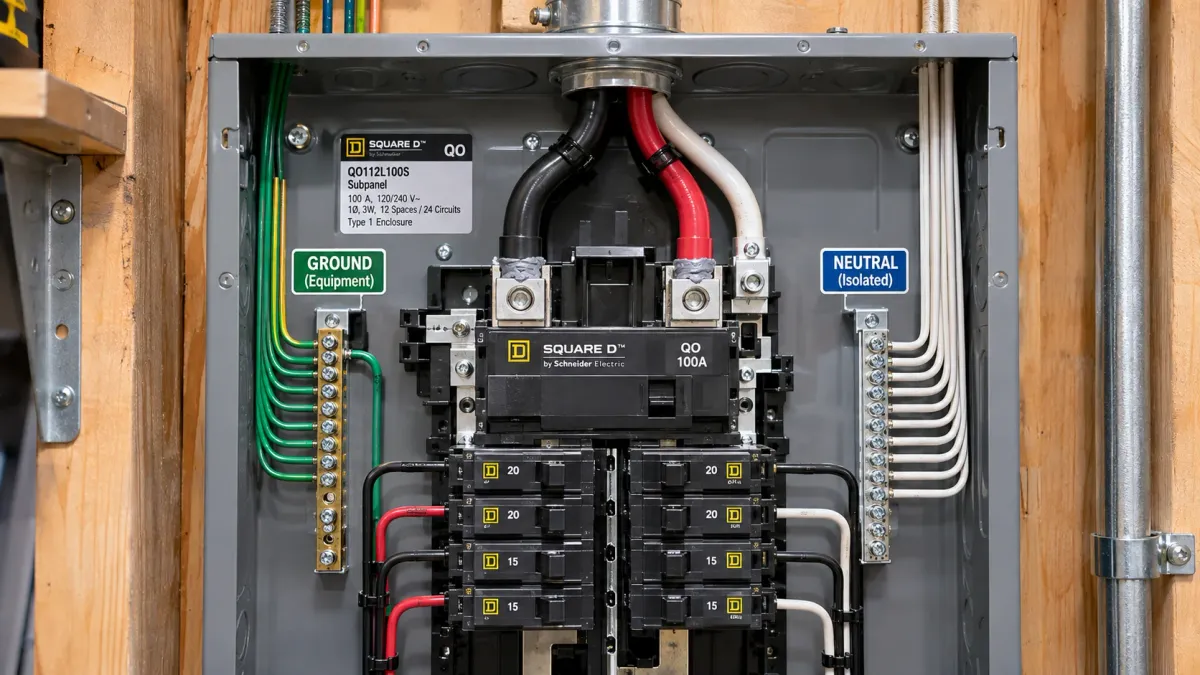
Table of Contents5 Sections
You are laying down a critical pass with your MIG welder on a trailer frame, the 60-gallon two-stage air compressor kicks on behind you to refill pressure, and the entire garage drops into pitch-black darkness. You trip over your welding lead in the dark, walk into the house basement in your steel-toe boots, and find the main house panel tripped cold because your garage shares power with the laundry room circuit.
Trying to run a serious home fabrication bay or woodworking shop on a single shared 15-amp branch circuit is dangerous and exhausting. Adding heavy 240-volt loads like electric vehicle chargers, industrial cabinet table saws, and forced-air heaters demands a dedicated secondary electrical service panel.
I wired heavy machinery bays and off-grid shop panels for decades. In this guide, I break down the simultaneous load mathematics between 60-amp and 100-amp subpanels, explain why smart DIY builders run aluminum feeder cable instead of expensive copper, and reveal the three fatal National Electrical Code traps that fail municipal electrical inspections.
Hank's Bottom Line on Workshop Subpanels
- A 100-amp subpanel is mandatory if you plan to run an EV charger (40-48A) alongside workshop heat (20A) or an air compressor (15A).
- Aluminum Mobile Home Feeder (MHF 2-2-4-6) delivers identical 100A performance to copper at roughly one-third of the wire cost.
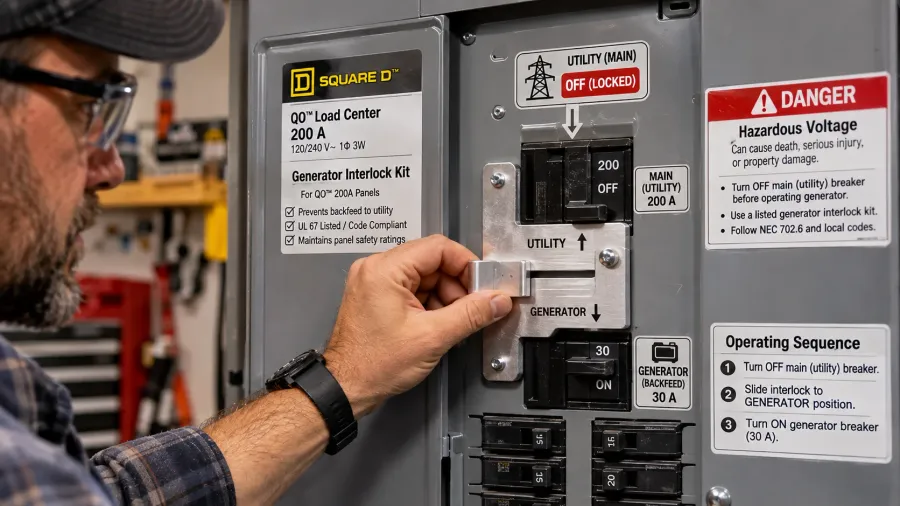
- Never install the green bonding screw in a subpanel; neutral and ground bus bars must stay 100% electrically isolated (floating neutral).
- Detached garages always require two 8-foot driven ground rods spaced at least 6 feet apart per NEC Article 250.
Sizing the Load: The 60-Amp vs. 100-Amp Reality Check
When planning a garage electrical service, homeowners frequently ask whether a 60-amp feeder provides sufficient power. Ten years ago, a 60-amp panel handled almost any home garage workshop comfortably.
Today, the energy landscape has changed completely due to high-amperage continuous loads. Consider a realistic simultaneous winter load in an active workshop:
- Level 2 Electric Vehicle Charger: 40 to 48 amps continuous
- 240-Volt Electric Workshop Heater: 20 to 25 amps intermittent
- 5-Horsepower Air Compressor (Cycling): 15 to 20 amps starting draw
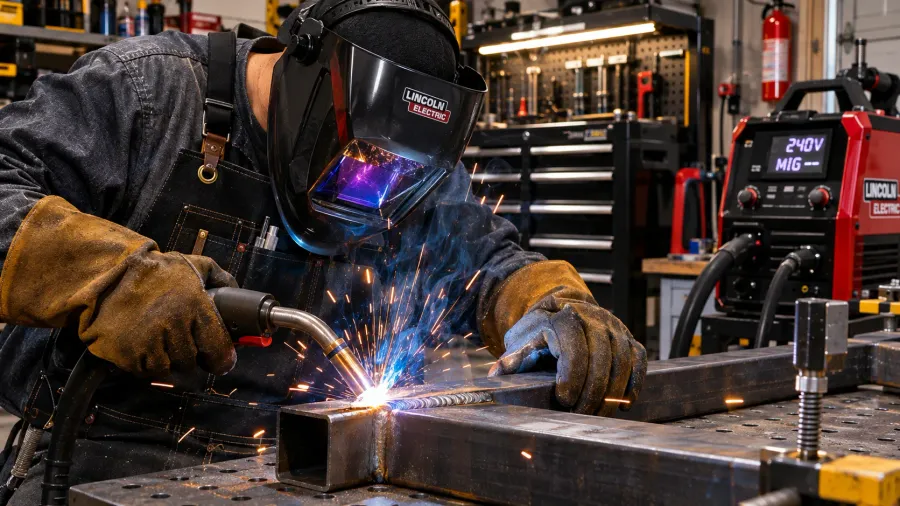
- 200-Amp Inverter MIG Welder: 25 to 30 amps peak
- High-Output LED Shop Lights and Shop Vac: 12 to 15 amps
If your electric vehicle begins charging while your garage heater maintains temperature and you fire up an air compressor to fill a truck tire, a 60-amp subpanel will trip instantly. Installing a 100-amp subpanel provides the ampacity headroom needed to operate heavy machinery and vehicle charging simultaneously without fear of nuisance tripping.
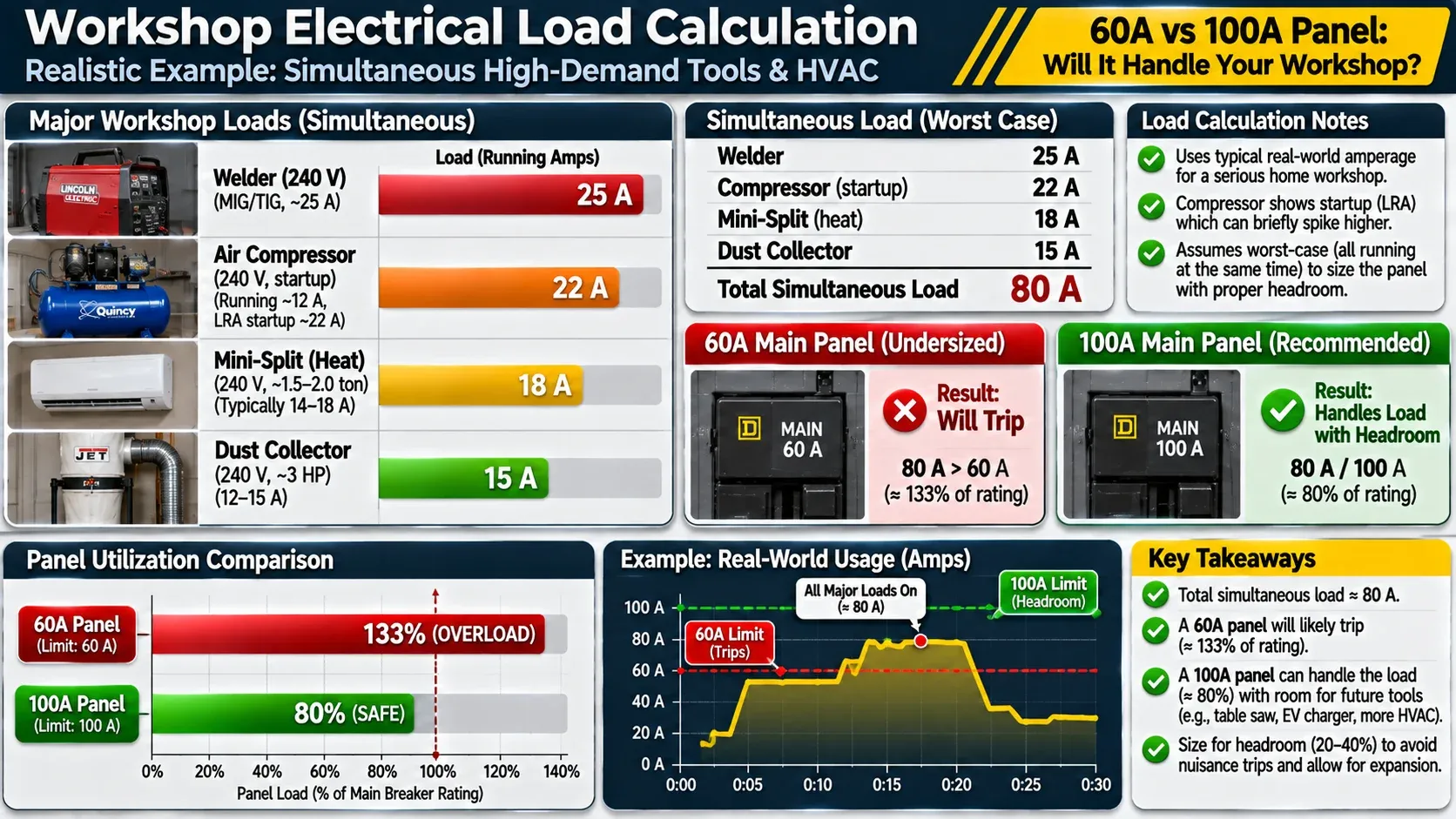
Electrical load calculation infographic for a serious home workshop, bar breakdown of simultaneous amp draws: 240V welder (25A), compressor startup (22A), mini-split heat (18A), dust collector (15A), showing 60A main breaker trip threshold exceeded vs 100A panel headroom, clean schematic aesthetic.
Workshop Subpanel Comparison: 60-Amp vs. 100-Amp Capacity & Feeder Costs
Analyzing wire gauge specifications, material costs per 100 feet, and expansion capabilities.
60-Amp Subpanel Setup
Single-car hobby shops with no electric vehicles or heavy heaters
- Smaller feeder wire pulls easily through 1-inch conduit
- Cannot support a 48A EV charger and a garage heater at the same time
100-Amp Subpanel Setup
Serious two-car workshops, metal fabrication, and EV households
- Runs 48A EV charging, heavy welders, and 240V heating simultaneously
- Demands minimum 1-1/2 or 2-inch conduit for pulling heavy conductors
The Copper Myth: Why Smart DIYers Use Aluminum MHF
Many DIY builders fear aluminum electrical wiring because of house fires that occurred in the 1960s and 1970s. Those historical failures involved small 15-amp branch-circuit wiring connected to incompatible brass screw terminals on residential wall outlets.
Modern heavy feeder cables use AA-8000 series aluminum alloy, which provides extreme ductility, thermal stability, and corrosion resistance. In fact, utility power companies feed virtually every residential neighborhood in North America using heavy aluminum conductors.
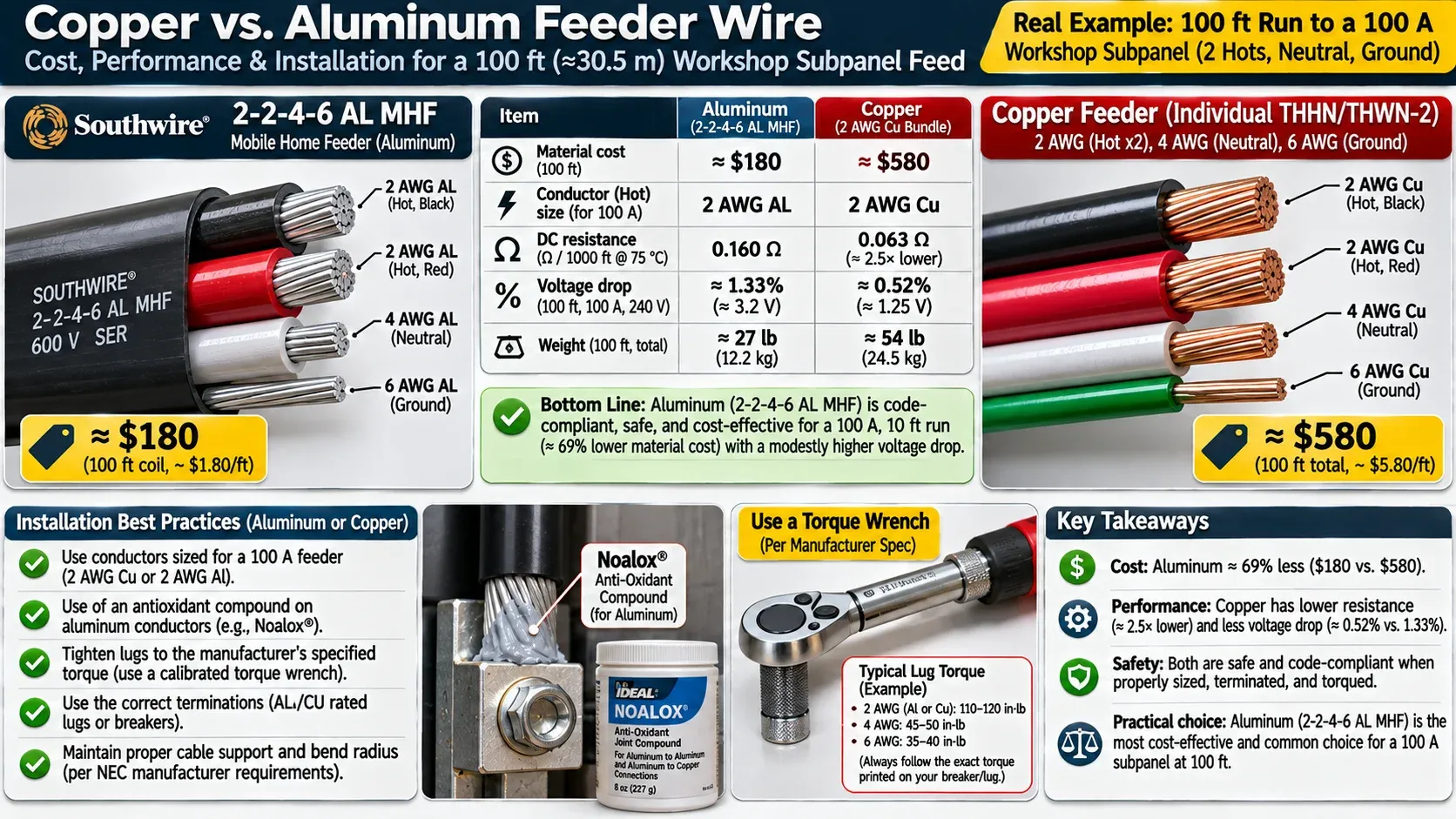
Financial and technical comparison infographic between copper vs aluminum feeder wire for 100 ft run, showing Southwire 2-2-4-6 Aluminum MHF cable cross section ($180) vs 2 AWG copper bundle ($580), torque wrench callout with Noalox compound on lugs, clear engineering style.
For a 100-amp feeder run spanning 100 feet from your main house panel to a detached garage, purchasing #2 AWG copper THWN wire will cost over $500. Installing 2-2-4-6 or 1-1-1-3 Aluminum Mobile Home Feeder (MHF) quad-plex cable costs roughly $160, saving you nearly $400 on feeder wire alone.
When terminating aluminum conductors into panel lugs, you must observe two simple professional rules: coat the bare stripped aluminum strands with Noalox anti-oxidant compound to prevent surface oxidation, and tighten every panel lug with a certified torque wrench to the exact manufacturer specification stamped inside the panel door.
The 3 Fatal NEC Code Traps in Detached Garages
Under NFPA 70 National Electrical Code (NEC Article 250), you must isolate the neutral bus from the equipment ground bus in any subpanel. If you leave the green bonding screw in place, neutral return currents flow through the metal enclosure and conduit.
Wiring a subpanel inside a detached garage or outbuilding requires strict compliance with the National Electrical Code. Inspectors fail DIY installations on three specific grounding and burial rules more than all other errors combined.
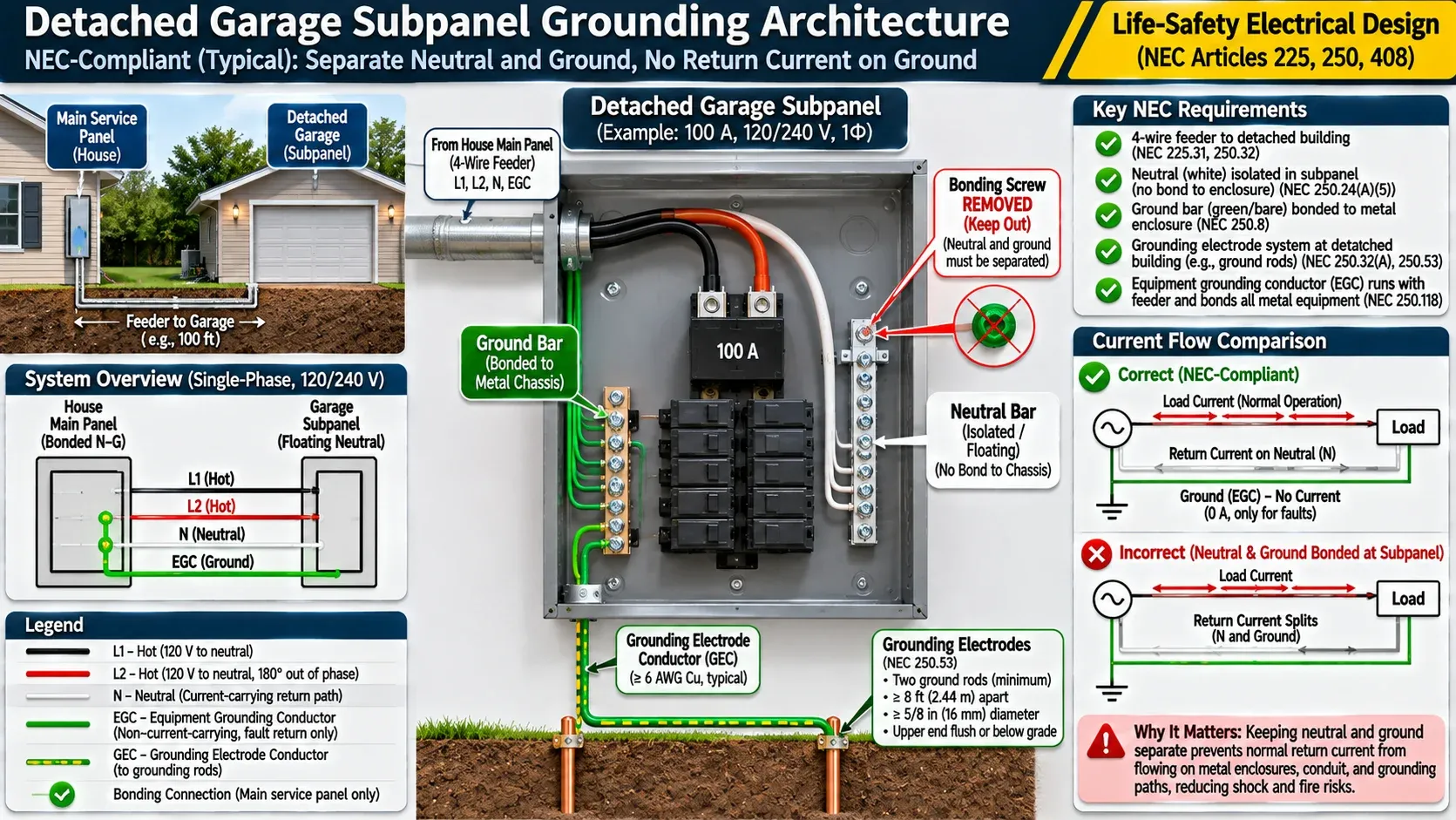
Life-safety electrical schematic showing detached garage subpanel grounding architecture according to NEC, green ground bar bonded to metal chassis and external grounding rods, white neutral bar completely floating with green bonding screw removed, zero return current on ground, clean technical CAD diagram.
Trap 1: The Bonded Neutral (A Lethal Shock Hazard)
In your main house electrical service panel, the neutral bus and the grounding bus bond together through a green bonding screw or strap. In any subpanel, you must completely isolate the neutral bus from the metal panel enclosure (known as a floating neutral).
Remove and discard the green bonding screw that ships loose in the subpanel carton, and ensure the neutral bar does not touch the metal enclosure. If you bond the neutral inside a subpanel, dangerous return currents travel across the metal panel casing and tool ground wires, creating a lethal shock hazard if someone touches a grounded metal drill press or vehicle chassis.
Trap 2: The Missing Ground Rod Electrode System
If your garage is physically detached from the main home, running a four-wire feed from the house is not enough. NEC Article 250 requires a separate grounding electrode system at the detached structure.
You must drive two eight-foot copper-clad steel ground rods into the earth beside the garage foundation, space them at least six feet apart, and connect them continuously with #6 AWG bare copper wire back to the subpanel ground bus. These rods dissipate lightning strikes and stabilize voltage differences during severe weather events.
Trap 3: Shallow Conduit Trench Burial Depth
The interior of any underground pipe or conduit is legally classified as a wet location. You can never pull standard paper-sheathed NM-B Romex cable through underground conduit, as moisture inside the pipe will destroy the paper insulation and cause ground faults.
When running PVC Schedule 40 conduit beneath a lawn or yard, the top of the conduit must sit at least 18 inches below finished grade. If the trench crosses beneath a vehicular driveway, the burial depth must increase to a minimum of 24 inches to prevent vehicle weight from cracking the underground pipe.
Step-by-Step Feeder Pulling: The Soap and Vacuum Trick
The 3-Step Heavy Feeder Pulling Protocol
Shop-vac and polymer lube method for gliding four heavy conductors through 100 feet of PVC conduit.
Shop-Vac Vacuum String Pull
5 minsTie a lightweight foam cylinder or bag to mason line. Insert into one conduit end and connect a shop vac to the panel end; airflow pulls line through 100 feet in 5 seconds.
Staggered Harness Head Makeup
15 minsPull 1/4-inch braided nylon rope with the mason line. Strip and stagger the four conductor tips by 2 inches, folding rope eyelet and taping head into a smooth bullet shape.
Polymer Wire-Pulling Lube Application
20 minsGenerously flood wire bundle with clear polymer cable lubricant at the conduit mouth as one person pulls rope from the panel end and one person feeds.
Heavy 100A feeder bundle seated cleanly inside panel lugs without pinched insulation or pulled elbows.
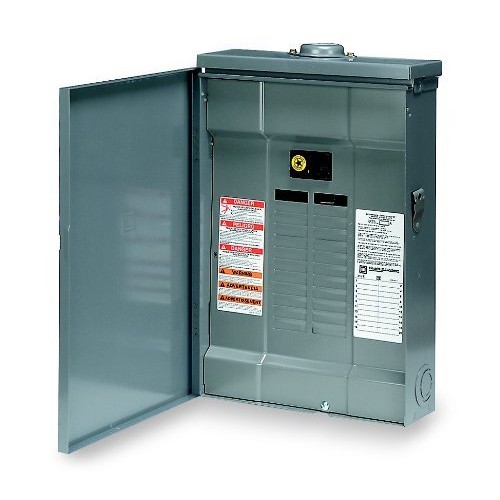
Square D by Schneider Electric QO 100-Amp 24-Space Subpanel
Best For: Primary garage workshop power distribution
Est. Price: $135 - $160
"The most reliable, electrician-preferred residential subpanel on the market, offering rugged construction and rapid fault identification."
- +Plated copper bus bars provide superior electrical conductivity
- +QO circuit breakers feature patented visual trip flags for instant fault diagnosis
- +Spacious 24-space interior offers ample room for future tool circuits
- -Square D QO breakers cost slightly more than standard Homeline breakers
- -Grounding bus bar kit must be purchased separately in some packages
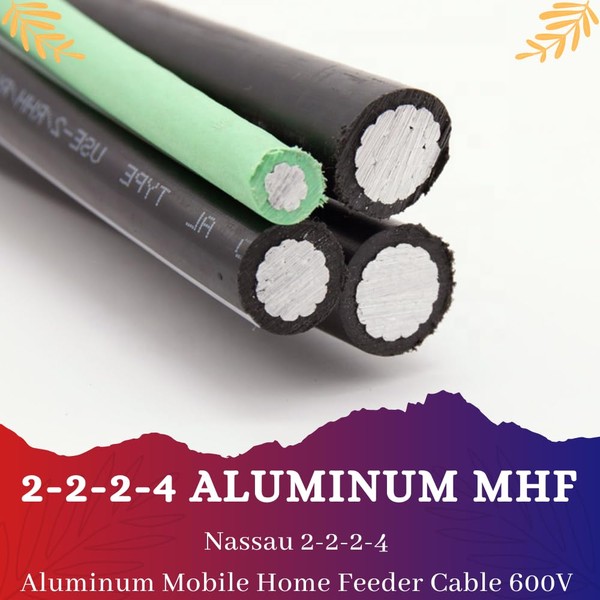
Southwire 2-2-4-6 Aluminum Mobile Home Feeder (MHF) Cable (100 ft)
Best For: Underground 100-amp conduit runs to detached garages
Est. Price: $150 - $180
"The industry-standard high-amperage feeder cable that slashes material costs while delivering reliable 100-amp continuous capacity."
- +Four-wire quad-plex assembly includes hot, neutral, and ground conductors
- +Durable cross-linked polyethylene (XLPE) jacket resists moisture and heat
- +Saves over $350 compared to equivalent copper feeder wire
- -Requires minimum 1-1/2 inch or 2-inch Schedule 40 PVC conduit
- -Demands careful application of anti-oxidant compound at all terminations
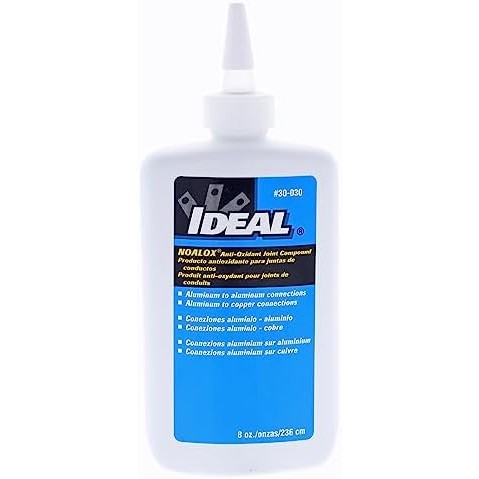
IDEAL Industries Noalox Anti-Oxidant Compound Tube (8 oz)
Best For: Treating aluminum feeder wire terminations
Est. Price: $12 - $16
"A mandatory five-dollar investment that eliminates terminal arcing and passes electrical inspections on all aluminum wiring jobs."
- +Suspended zinc particles penetrate oxide films to ensure tight electrical contact
- +Prevents galvanic corrosion between dissimilar aluminum and copper metals
- +Reduces terminal operating temperatures under heavy electrical loads
- -Thick grease consistency requires careful cleanup with shop rags
- -Squeeze bottle tip must be cut carefully to control flow rate
Powering Your Future Workshop Tools
Once you land your 100-amp feeder cables and verify that your neutral remains completely floating, you can pull dedicated circuits for all your high-demand workshop gear.
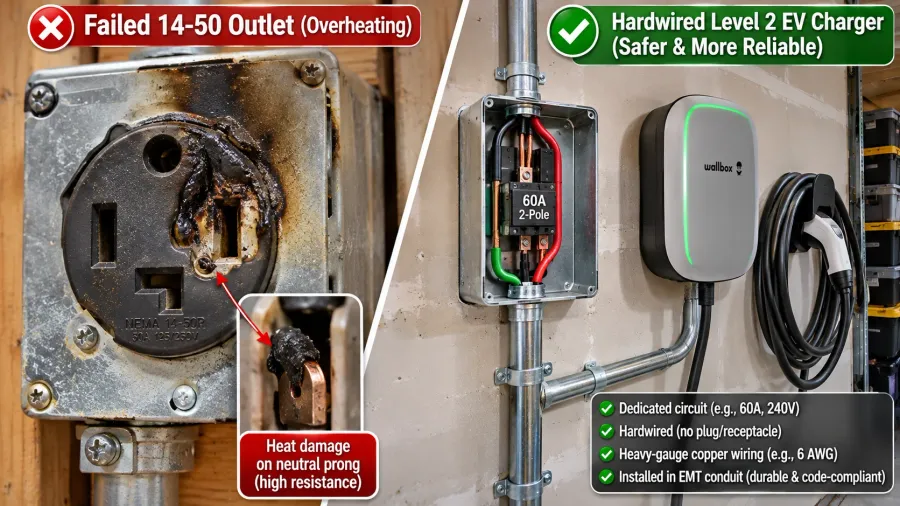
Route a dedicated 60-amp branch circuit straight to your parking bay by following our installation guide on EV charger in the garage: hardwired vs. NEMA 14-50.
If you are planning winter climate control for your space, calculate the electrical demands of a 240-volt mini-split system using our winter heating guide for heating an uninsulated garage. To plan your equipment drops, evaluate power needs with our guide on 120V vs. 240V welders for a home garage, and balance your ambient circuits using our 2-car garage lighting blueprint.
Hank Miller
Hank is a master craftsman and DIY mechanic based in Ohio. He tests workshop equipment, garage floor coatings, and power tools under brutal, real-world workshop conditions, with zero paid brand sponsorships.