How to Pull Deep Oil Stains Out of Concrete: The Poultice Method That Beats a Pressure Washer

Blasting oil spots with a pressure washer drives petroleum deeper into porous concrete. Here is how capillary poultices pull old black stains to the surface.
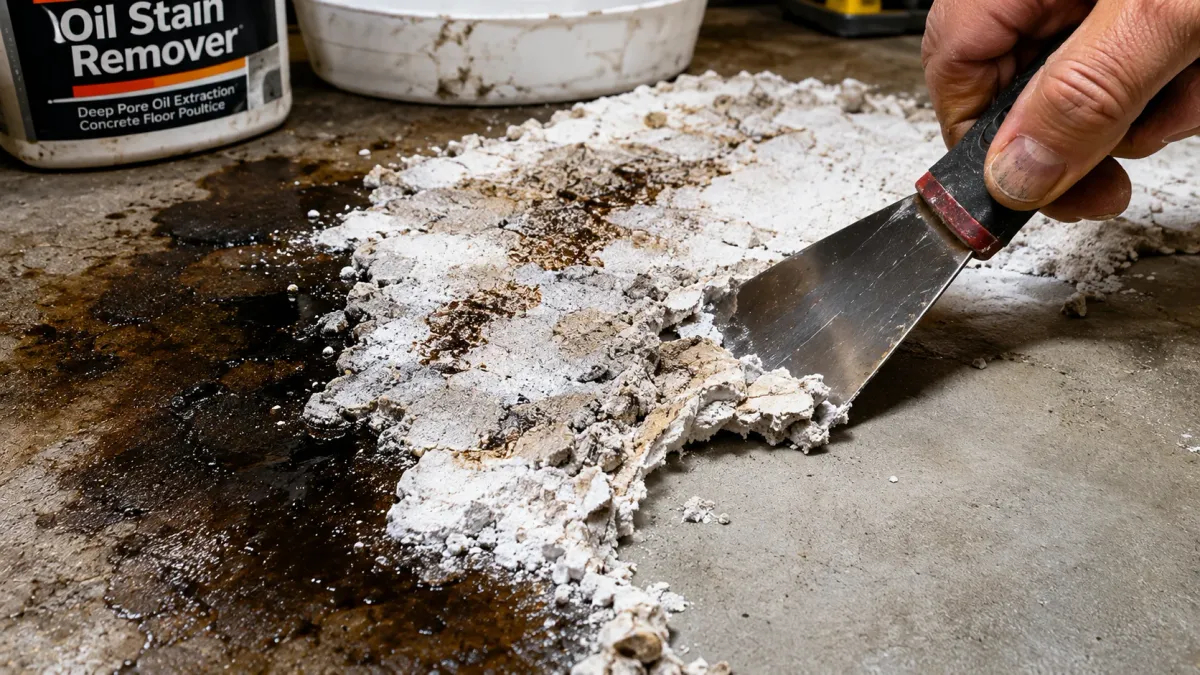
Table of Contents5 Sections
An older pickup truck drips a dime-sized drop of transmission fluid on your garage floor every night, and by spring, that slow leak blooms into a sticky black puddle that wicks dark oil across the walking bay. You drag out a high-pressure washer with a bottle of dish soap, blast the slab for an hour, and watch the dark stain reappear three days later.
Put the pressure washer back in the shed. Blasting porous concrete with 3,000 PSI of water drives petroleum molecules deeper into microscopic capillary pores like a hydraulic hammer.
Concrete acts as a rigid stone sponge filled with interconnected capillaries. To lift petroleum out of cured slab pores, you must reverse capillary pressure using an absorbent poultice. Here is how a $3 bag of clay litter handles fresh spills, and how commercial wicking poultices turn five-year-old black stains into dry powder you sweep away with a broom.
Oil Stain Severity & Extraction Matrix
Assess stain depth and age before selecting your chemical cleaner.
Liquid motor oil pools wet on concrete surface; spilled within the last 48 hours
Stain dried into a matte dark grey shadow; spilled within the past 12 months
Pitch-black, sticky asphaltic stain soaked deep into concrete over 3 to 10 years
Concrete Is a Sponge: Why Soapy Water Fails
As documented in the American Concrete Institute (ACI 515.2R Guide to Selecting Protective Systems for Concrete), unsealed concrete contains a porous capillary network that draws petroleum hydrocarbons inches beneath the surface.
Under an electron microscope, cured concrete resembles a dense honeycomb of tiny tunnels and air voids formed as hydration water evaporated out during the original pour.
When warm engine oil drips onto a slab, capillary wicking pulls liquid hydrocarbons downward through those porous channels. Used motor oil contains carbon soot, unburned fuel, and heavy metal wear particles. While dish soap cuts the oily film resting on the top 1/64-inch of concrete, the dark petroleum pool trapped 1/4-inch deep remains untouched.
Over the next warm week, sub-slab moisture and concrete breathing draw that trapped oil back to the surface through natural capillary return, making your floor look dirty again.
If you plan to apply an epoxy or polyaspartic coating over the slab, oil removal is non-negotiable. Trapped petroleum destroys polymer adhesion, causing fresh resin coatings to peel off; review our guide on why cheap garage epoxy coatings peel under tire heat to understand the importance of oil-free concrete prep.
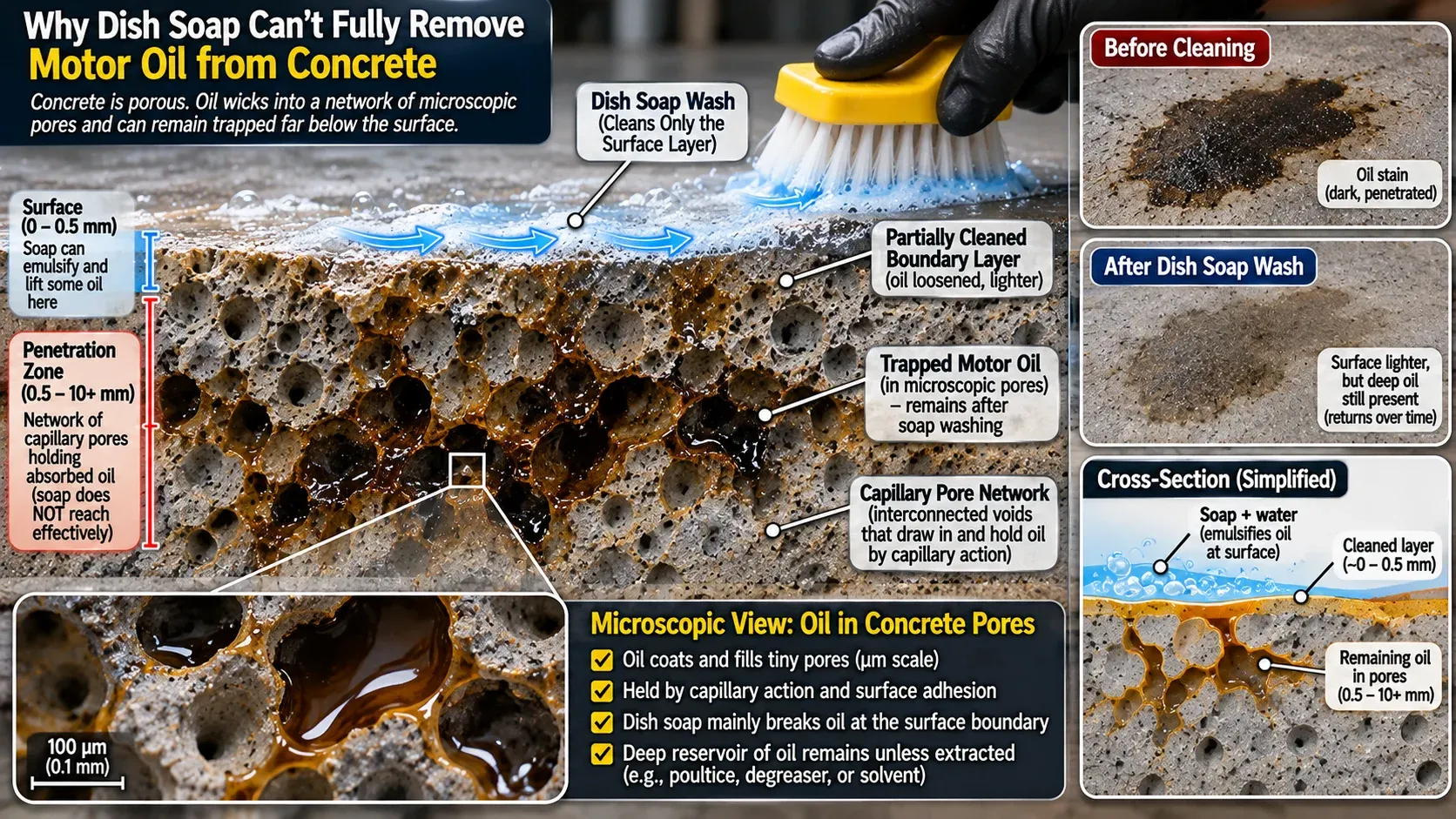
Microscopic cutaway scientific diagram of concrete slab structure showing capillary pore network, dark motor oil trapped deep within microscopic voids beneath surface, blue dish soap wash arrow only cleaning upper boundary layer leaving deep reservoir untouched, labeled educational callouts.
Concrete Oil Cleaning Methods Compared
Compare chemical mechanism, elbow grease required, and real cleanup efficacy.
Dish Soap & Pressure Washer
Rinsing exterior asphalt driveways only
- Inexpensive
- Cleans topical surface dust across the driveway
- Forces hydrocarbons deeper into pores
- Splashes greasy oily water across shop walls
The $3 Clay Cat Litter Crush
Active oil filter spills, radiator overflows, and fresh leaks
- Bentonite clay absorbs liquid oil in minutes
- Zero water required
- Cannot extract old oxidized stains that dried months ago
Chemical Capillary Wicking Poultice
Ancient black transmission and motor oil stains beneath vehicle bays
- Dissolves petroleum down to 1/2-inch depth
- Dries to white powder you sweep up
- Takes 5 to 8 hours to dry completely
- Requires good garage ventilation
Method 1: The $3 Clay Cat Litter Crush (For Fresh Spills)
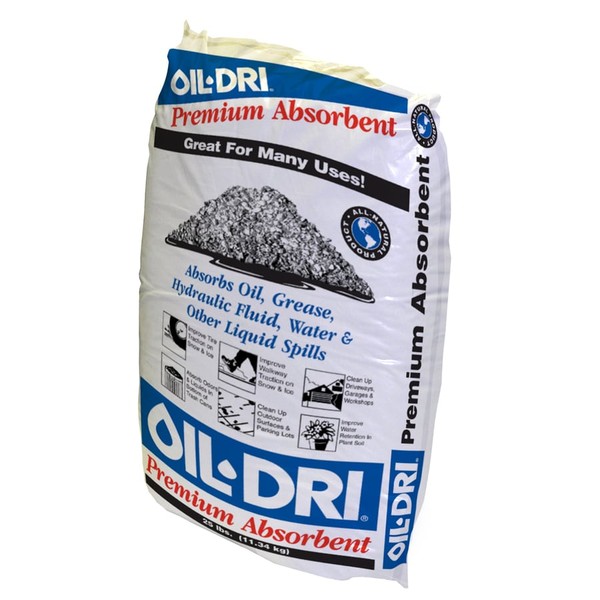
Oil-Dri Heavy Duty Absorbent Clay Granules (40 lb Bag)
Best For: Crushing over fresh motor oil and transmission leaks before they penetrate
Est. Price: $21.99
"Always keep a bag of absorbent clay in your shop corner; stepping on a fresh spill within five minutes prevents 90% of permanent deep concrete staining."
- +Natural thermally-activated montmorillonite clay draws liquid oils rapidly
- +Crushing granules into powder with your work boots creates sub-micron capillary suction
- +Inexpensive 40-pound bulk bag handles dozens of workshop fluid accidents
- -Creates fine clay dust during heavy brushing (wear a dust mask when sweeping)
- -Cannot pull deep stains that have cured in concrete pores for months on its own
If you drop an oil filter or discover a fresh puddle beneath your car, act before the petroleum wicks deep into concrete pores.
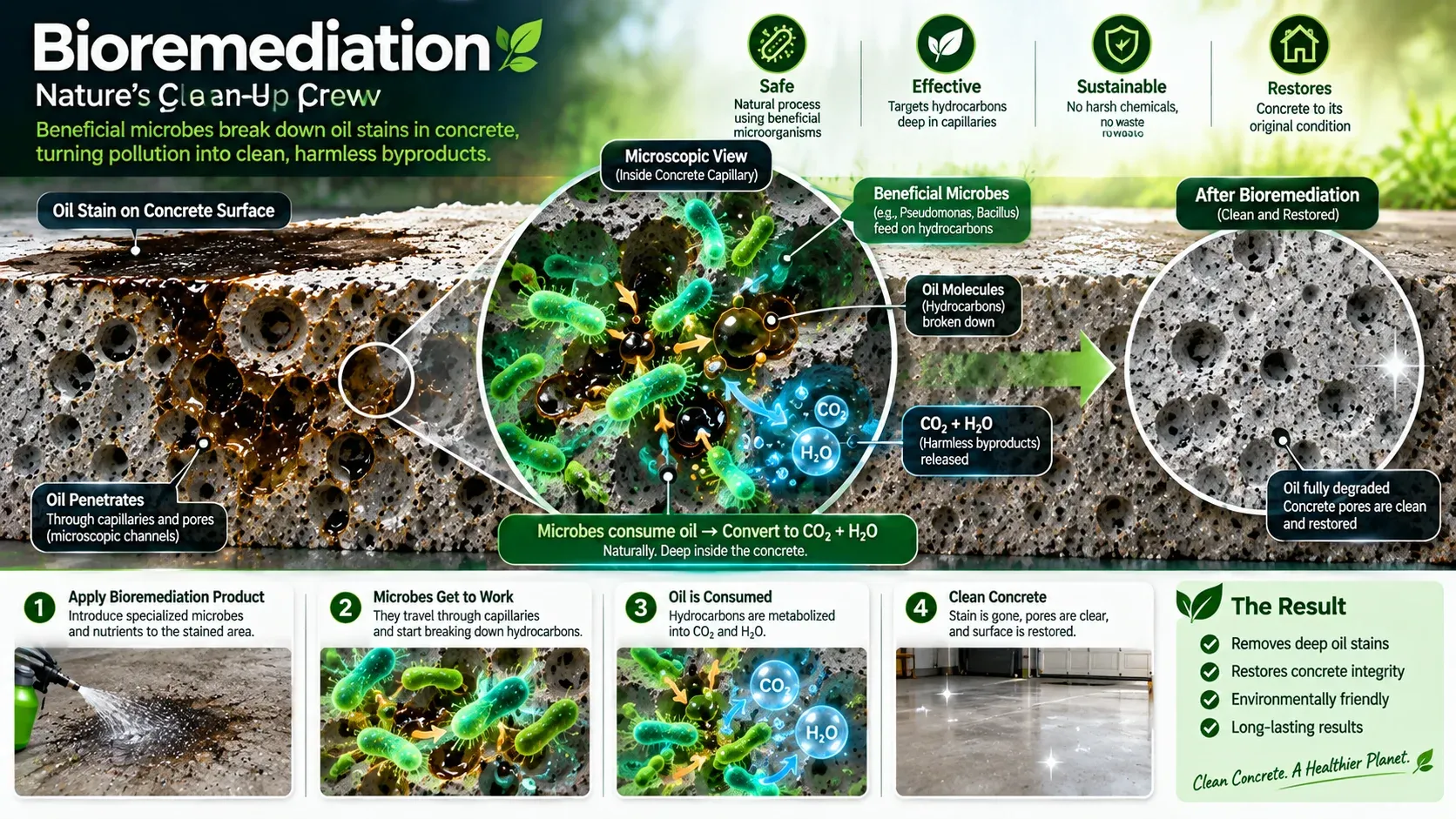
Clean infographic illustration of bioremediation oil stain removal on concrete, microscopic view showing beneficial microbes consuming hydrocarbon oil molecules within concrete capillaries and releasing harmless carbon dioxide and water, futuristic green science graphic style.
Do not buy expensive clumping cat litter made with cornstarch, cedar, or perfume crystals. You need a $3 paper bag of basic non-clumping clay litter, made from raw calcined Fuller’s earth or bentonite clay.
Execute this mechanical crushing trick:
- Cover the puddle: Pour a generous 1-inch layer of dry clay litter over the oil spill, extending two inches past the edges of the pool.
- Crush granules into fine flour: Step directly onto the pile with your work boot and twist your heel back and forth with full body weight. Alternatively, take the flat end of a 2x4 lumber cutoff and tamp the granules vigorously.
- Leave for 24 hours: Crushing the clay breaks large pebbles into microscopic dust particles, increasing total absorbent surface area tenfold. The clay powder draws liquid oil out of surface pores through natural capillary pull.
- Sweep dry: Sweep the soaked powder into a dustpan and dispose of it in household trash.
Method 2: The Poultice Technique (For Stubborn Old Stains)
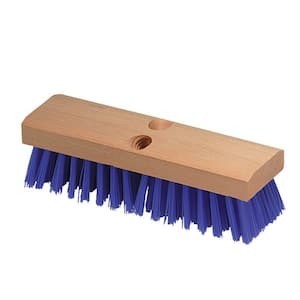
Carlisle Commercial Stiff Polypropylene Deck Scrub Brush (10-Inch with Handle)
Best For: Scrubbing poultice chemicals and degreasers deep into concrete pores
Est. Price: $29.95
"Cheap kitchen brooms skate right over concrete texture; this stiff industrial scrub brush works cleaning poultices deep into microscopic slab pores."
- +Extra-stiff crimped polypropylene bristles resist harsh solvent cleaners and acids
- +Heavy-duty threaded connection will not strip or snap under two-handed downward force
- +Wide 10-inch flare scrubs both flat slab surfaces and expansion joint grooves
- -Stiff bristles can flick solvent droplets if scrubbed too aggressively
- -Demands thorough rinsing after chemical scrubbing to prevent bristle clumping
Once you draw the oil out of the slab, inspect the surrounding area for substrate fractures. If you find hairline fractures opened by road salts, follow my steps on how to fix cracks in a concrete garage floor before coating before applying any protective sealer or paint.
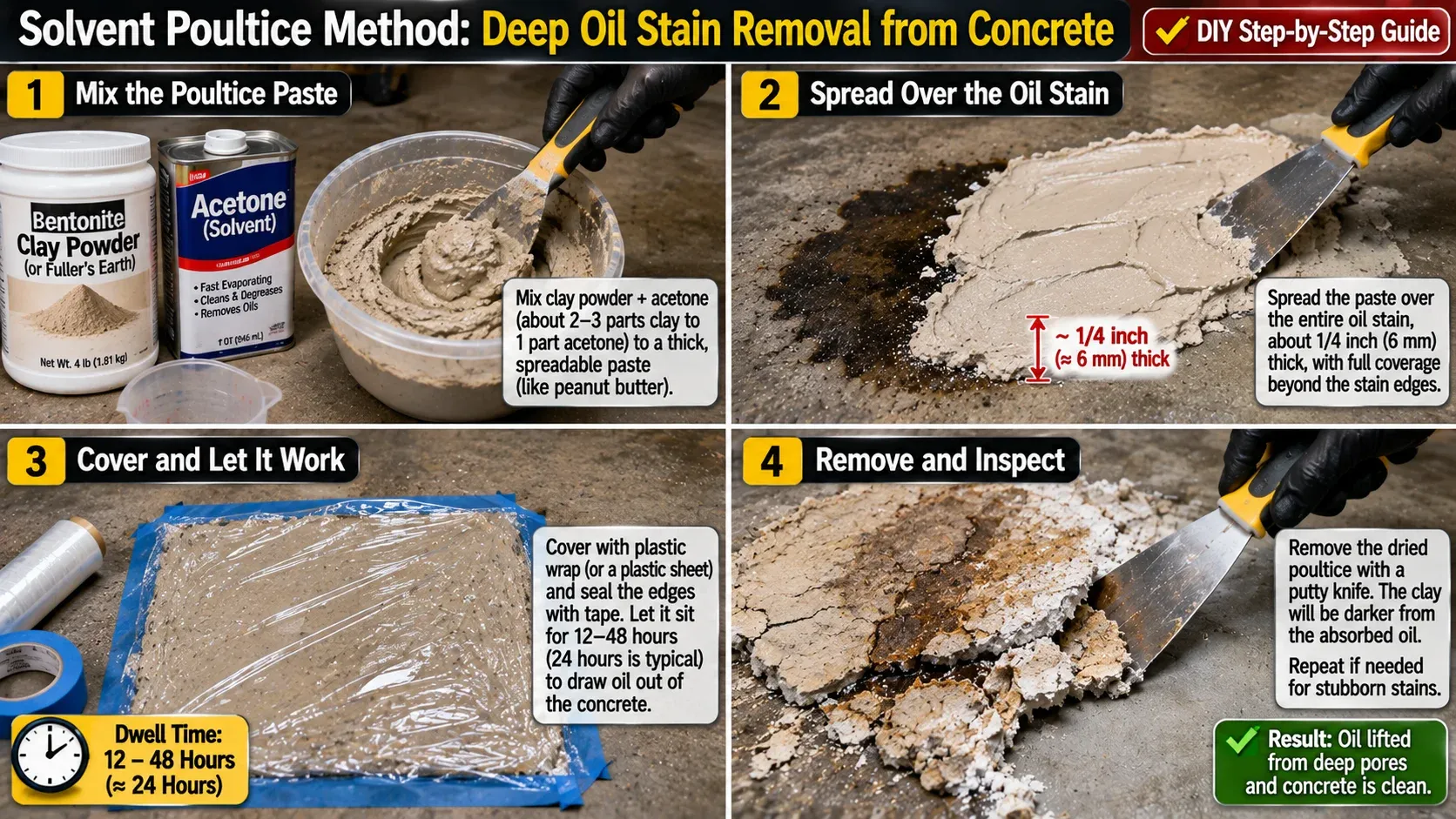
Four-panel step-by-step instructional photo collage showing solvent poultice concrete oil removal: panel 1 mixing clay powder and acetone paste, panel 2 spreading 1/4 inch thick paste over dark oil stain, panel 3 covering with plastic wrap taped down, panel 4 scraping away dried oil-saturated powder with putty knife, crisp informative DIY guide.
For black spots that soaked into concrete years ago, dry clay cannot break chemical bonds. You need a chemical extraction poultice.
A poultice pairs a powerful industrial solvent that dissolves dried petroleum resins with a fine microscopic absorbent powder suspended in liquid slurry:
You pour the thick slurry directly over the oil stain without scrubbing. The solvent penetrates deep into concrete pores, dissolving oxidized motor oil into a mobile liquid state.
As the solvent evaporates upward into the air, capillary wicking pulls the suspended oil upward with it, trapping the petroleum inside the drying powder layer.
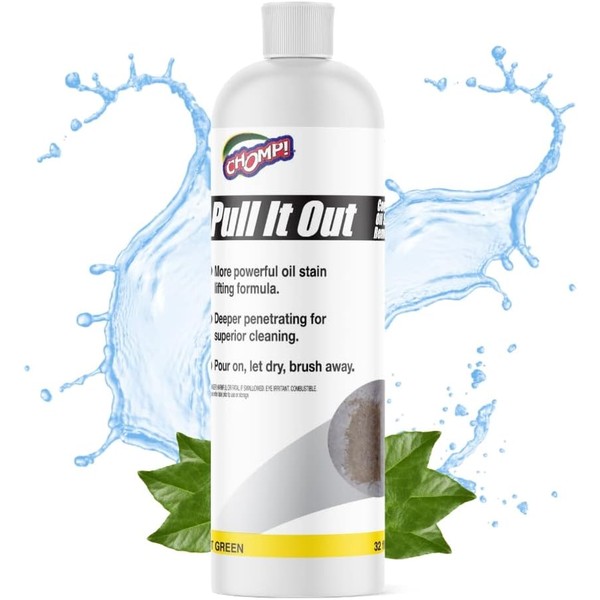
CHOMP! Pull It Out Oil & Grease Stain Remover
Best For: Pulling ancient black oil and transmission fluid stains out of concrete slabs
Est. Price: $24.99 (32-oz)
"The most effective chemical cleaner for set-in garage stains. It extracts deep oil without backbreaking wire brush scrubbing."
- +Deep-wicking formula draws petroleum out of concrete up to 1/2-inch deep
- +Dries into a clean white chalky crust that sweeps away easily with a push broom
- +Bleach-free, non-acidic formula will not etch or damage finished concrete surfaces
- -Demands 5 to 8 hours of quiet drying time; rapid drafts can dry top before deep wicking finishes
- -Severely saturated ancient stains may require a second application to lift 100% of shadow
Follow these steps for deep extraction:
- Pour the liquid directly onto the stain to a uniform thickness of 1/8-inch, completely hiding the black oil.
- Walk away and leave the liquid untouched for five to eight hours.
- As the cleaner dries, the dark liquid turns into a bone-dry, brilliant white chalk crust.
- Take a standard shop push broom and sweep the powder into a dustpan. The concrete underneath reveals its original clean grey color with zero oil shadow.
Sealing the Concrete Against Future Leaks
Once you pull oil out of your slab, do not leave bare concrete pores exposed to the next vehicle drip.
Spray a penetrating lithium silicate concrete densifier across the clean surface. Penetrating silicates react chemically with free lime inside the concrete, growing insoluble calcium-silicate-hydrate crystals that permanently solidify microscopic pore channels.
Sealing your floor blocks oil droplets from soaking into slab pores, allowing future vehicle drips to wipe clean with a shop towel before stains develop.
The Bottom Line on Concrete Oil Stains
Stop scrubbing your floor with dish soap and leave your pressure washer in the shed.
Pour non-clumping clay litter over fresh drips and crush it into powder with your boot heel. For deep, oxidized black stains, pour a bottle of CHOMP Pull It Out poultice, let it dry into chalk overnight, and sweep away the stain with a broom. You will restore clean concrete without scrubbing on your hands and knees.
Never pour solvents onto a floor drain. Once your slab is clean, prevent future messy oil drops by switching to a vacuum oil extractor vs drain plug setup that empties engine sumps directly from the dipstick tube.

Hank Miller
Hank is a master craftsman and DIY mechanic based in Ohio. He tests workshop equipment, garage floor coatings, and power tools under brutal, real-world workshop conditions, with zero paid brand sponsorships.